
Making a one-minute film on one desktop
I planned and drafted a 59-second short with an AI-generated lead in one afternoon on one NVIDIA RTX Spark desktop, finished it at 1440p the same evening, then used the same steps for a vertical short with a talking host. This entry covers what worked, what broke, and the rules I would keep.
Key takeaways
- For this video model, detailed camera direction in words beat a storyboard page.
- Write the last moment of one clip and the first moment of the next as the same picture, or the cut breaks.
- Lock the story in fast drafts and make the final at the draft size before upscaling. That keeps the motion I approved.
- Write every spoken line with its time and state every silence, or the model invents speech.
- Upscale clip by clip: one job for the whole film ran past the one-hour job limit.
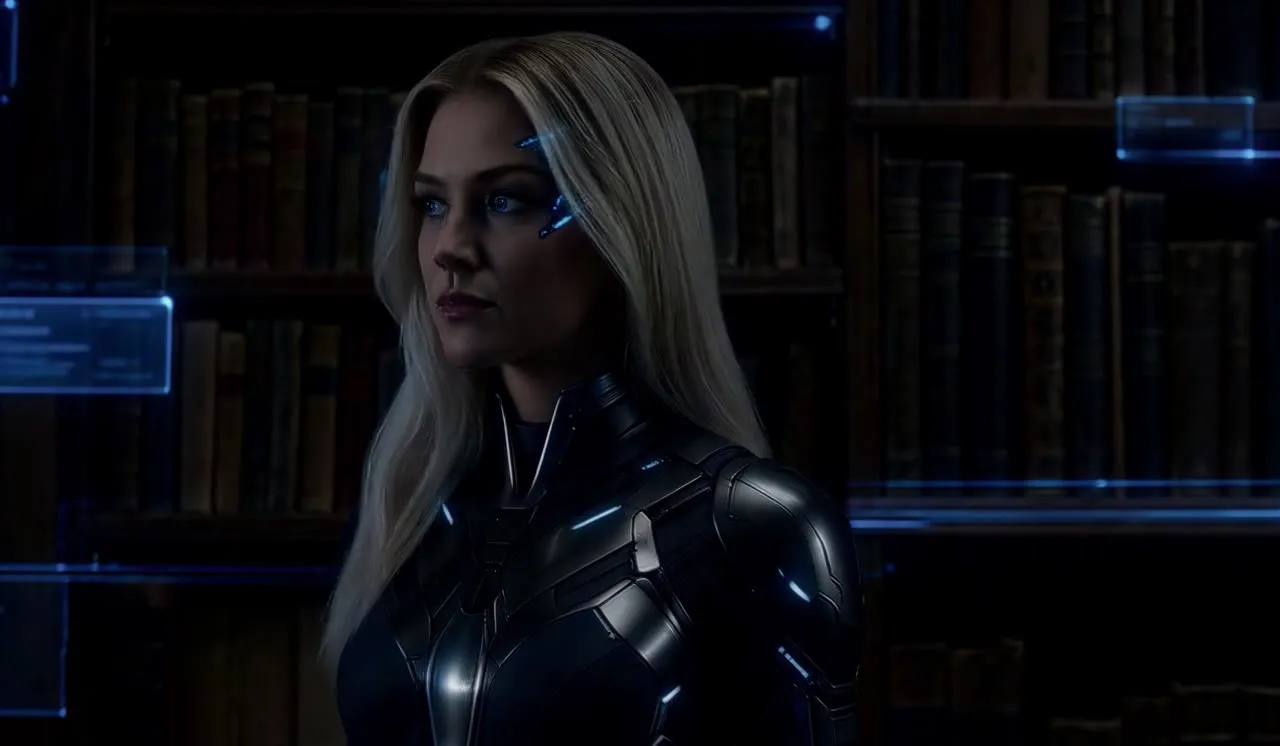
AVA, the archivist of an imaginary library, patrols the stacks at night. Faceless agents break in. She fights them off and seals the vault, and the third one corners her. As its gloved hand covers the lens, she wakes up in bed and says, "What a weird dream."
The lead is Jessica, a character generated entirely from prompts, with every picture of her traceable to the prompt that made it. AVA is a second look for the same character. Everything ran on one RTX Spark desktop. Nothing went to a cloud service, and the cloud bill was $0.
The setup
| Part | What I used |
|---|---|
| Workflow | ComfyUI runs every model. A custom app I built sits on top of it to manage characters, reference pictures, prompts, the job queue, stitching, and upscales |
| Video | MiniMax H3 running locally, in its reference-to-video mode: a character model, reference pictures, and a written shot list go in, a clip with sound comes out |
| Stills | Qwen Image 2.1, for reference plates and the character sheet |
| Upscale | SeedVR2 7B, to take the finished clips to 1440p |
| Machine | One NVIDIA RTX Spark desktop with 128 GB of unified memory |
| Time | About 90 minutes of graphics processor (GPU) time for drafts, then about 3 GPU-hours for the final |
Where the idea came from
The filmmaker PJ Ace described how his team stopped rerolling expensive video generations: build the scene as grey stand-ins in Blender, export storyboard pages with a camera line for every panel, and send the video model those pages plus character sheets. I wanted to know whether the same trick works on a model I can run at home.
The test that changed the plan
Before writing the whole film I rendered the chase scene twice on the same seed. One version got a six-panel storyboard page as an extra reference. The other got the same written shot list without it.
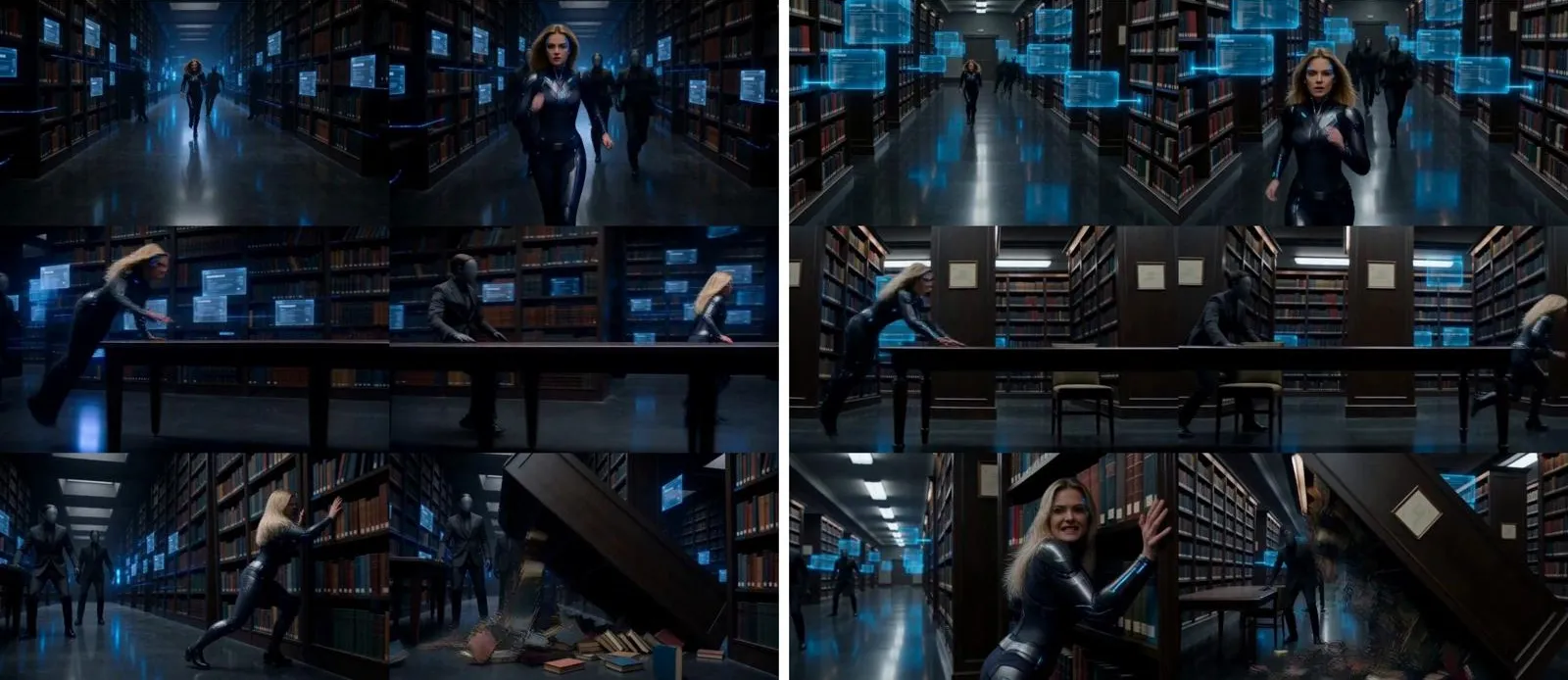
The text-only version had the better action. The storyboard held the look of each panel but made the movement stiffer, and my written shot list already gave every camera position and who stood where. So for this model I write detailed camera direction in words and keep storyboards for my own planning.
How it was made
- Give the character a look every tool can use: a persona for AVA, a video model built from it, and a face-and-body card for still pictures.
- Make the supporting pictures: a sheet for the faceless agents, a bedroom, and two empty archive plates. Without a plate, the archive drifted into an ordinary office library.
- Plan five clips of 10 to 12 seconds, joined by hard cuts. The model tops out at 15 seconds a clip, and an earlier attempt at one long continuous take fell apart by the third clip.
- Write every clip as a structured shot list: who is in it, what each shot shows, where the camera is and which lens, who is on the left or right, and what is heard.
- Render fast drafts at 768 by 432, check frames from every clip, and stitch.
Two fixes from the test went into every clip. Sending the character model twice kept her face steady when she was small in frame. The model smears a falling bookshelf into mush. I replaced the fall with a cut on impact: she shoves the shelf, and the next frame shows it already on the floor.
Version 2: fixing the continuity breaks
Three moments in the first cut felt wrong. Each one traced back to a gap in my shot list.
- She sees the agents, then is suddenly mid-sprint. The turn-and-run was never written. Fix: the next clip opens on her face as she sees them, then she spins and runs.
- The bookshelf seemed to fall on her. The shot never said where the agents were or where she ended up. Fix: one wide shot with her on the right, the agents on the left and the shelf between, tipping away from her.
- The vault lock glows, then she is suddenly standing with her back to the door and the glow is gone. The turn was missing, and the next clip described the door differently. Fix: one camera move from the lock to her turning away, and the next clip opens on that exact picture with the door still glowing.
The rule I kept: write the last moment of one clip and the first moment of the next as the same picture, and place every action relative to the other people in frame as well as the edge of the frame. Re-rendering the three clips took about 25 GPU-minutes.
From draft to final
Rendering the final at a bigger size would have changed the motion, even on the same seed, and the motion was what I had approved. So every clip was rendered again at the draft size with the same shot list and seed, at higher quality: 20 steps instead of 14, with the speed-up that predicts some steps switched off. That took 8 to 14 minutes a clip.
Then SeedVR2 took each clip to 1440p. It sharpens the frames it is given and adds no new motion. My first try upscaled the whole stitched film as one job, and it stopped after an hour because a video job may run for one hour at most. Clip by clip, each upscale took about 27 minutes, under the limit. The five upscaled clips were stitched again with hard cuts.
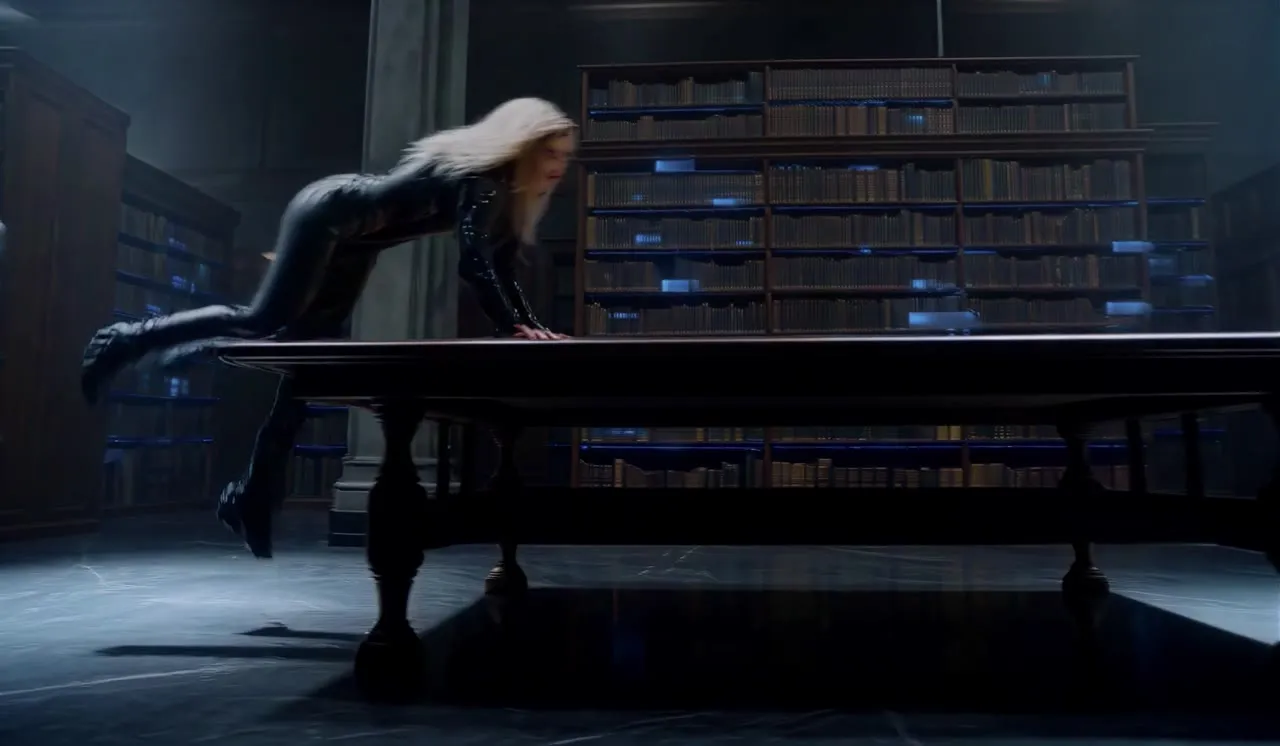
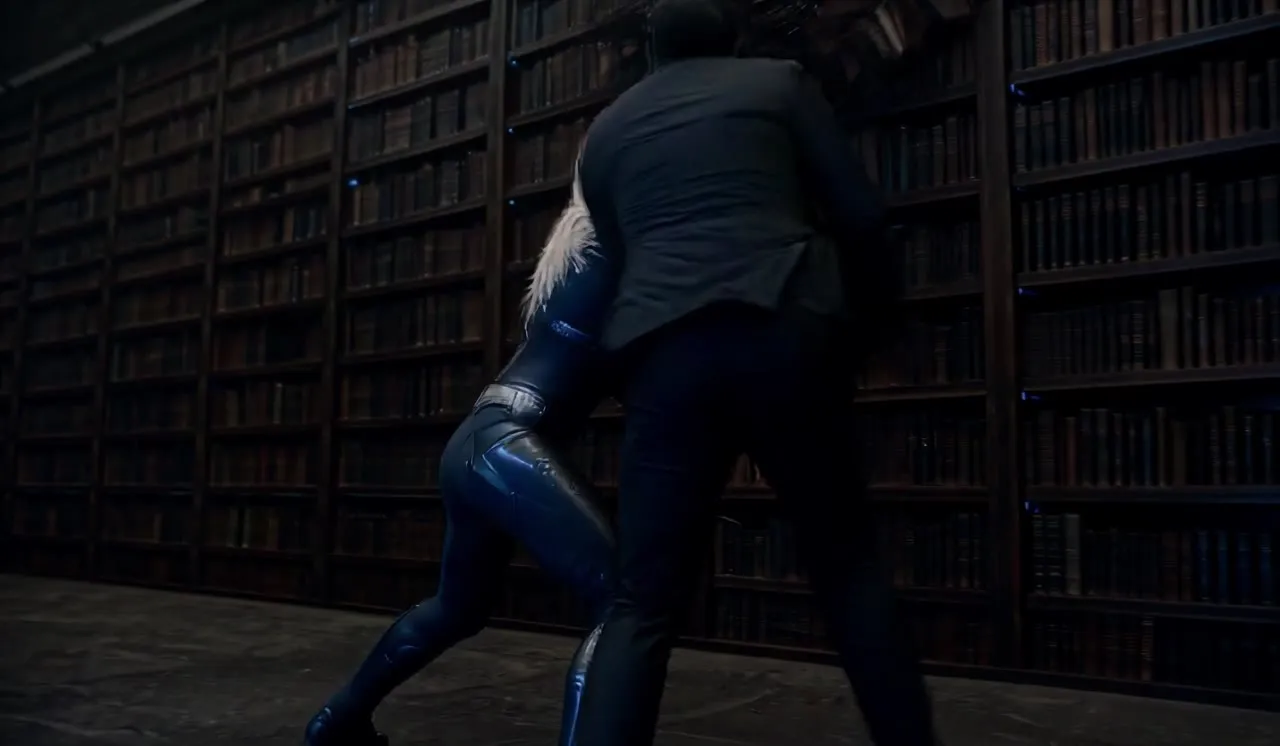
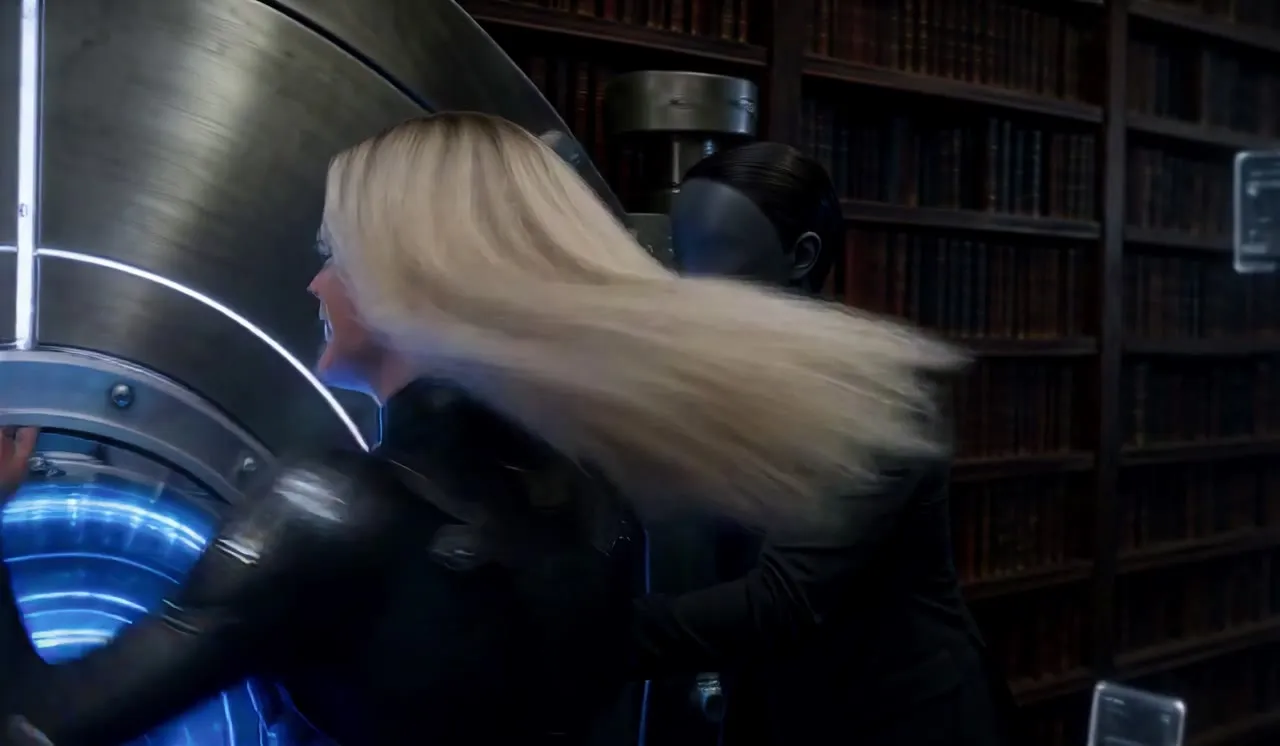
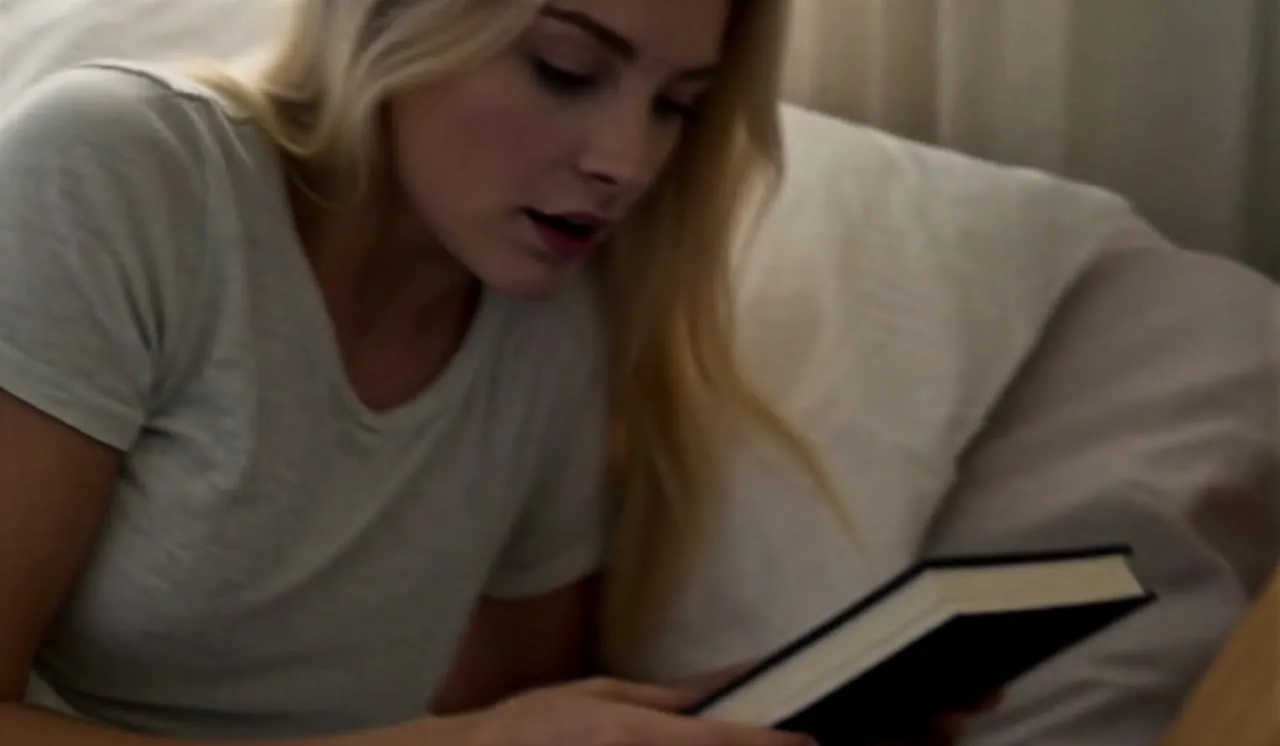
Night in the archive
What I would keep
- Describe the camera in words: direction, lens, height, distance, and who is on which side.
- One empty reference plate per location keeps the world from drifting.
- Cut on impact instead of showing big objects falling.
- Treat every cut as one picture written twice.
- Draft fast, lock the story, then make the final at the same size and upscale.
- Write every spoken line with its time, and state the silences.
Second run: a 68-second vertical short
The next day I used the same steps for a different format: a vertical short where Jessica is the host and talks straight to the camera. She walks through three levels of dream car, a Mustang GT, a Porsche 911 and a Lamborghini Urus, then cuts to a driveway with the two cars I actually own, a Cayman and a Macan S, and asks viewers for their own dream car.
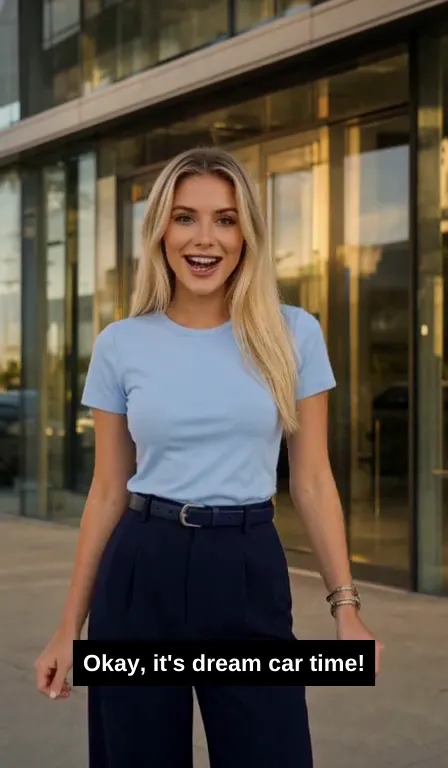
This is the approved draft as rendered, with no upscale. Every clip opens and closes on the same waist-up frame of her facing the camera, and the place changes inside her moves: a spin, a swipe across the lens, a step into the lens, a snap to white. I added the titles and captions in editing. The video has no music yet; a separate test will add one score across the whole video.
| Part | What changed from the first film |
|---|---|
| Host | A new business-casual look for Jessica, picked from Qwen stills, then a persona and a face-and-body card built from the pick |
| Voice | Her own voice: four short auditions rendered in H3, I picked one by ear, and a clean cut of it became the voice model sent with every clip |
| Cars | Qwen Image 2.1 Edit put the real badges on the dream cars and redrew my two cars from my own photos, fronts only, with one plate blanked |
| Format | Vertical, 448 by 768 at 24 frames a second, 14 steps with the step speed-up on, and two copies of the character model |
| Time | About 15 clip renders across four drafts, about 5 GPU-minutes each |
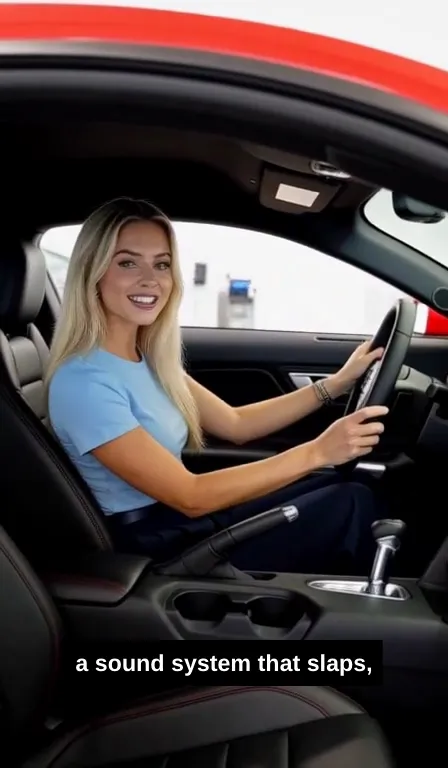
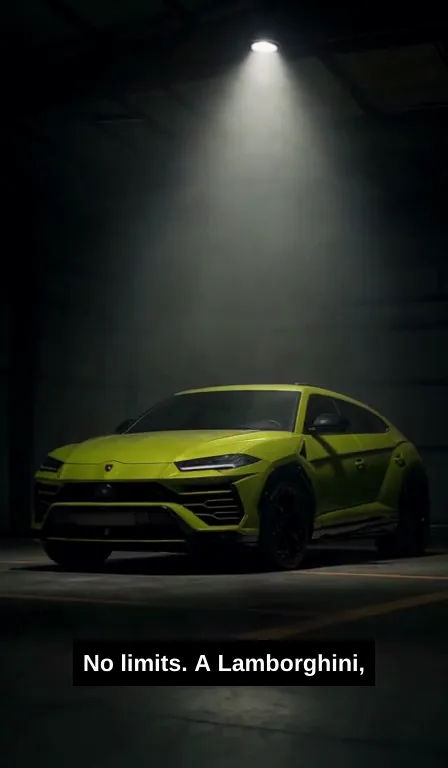
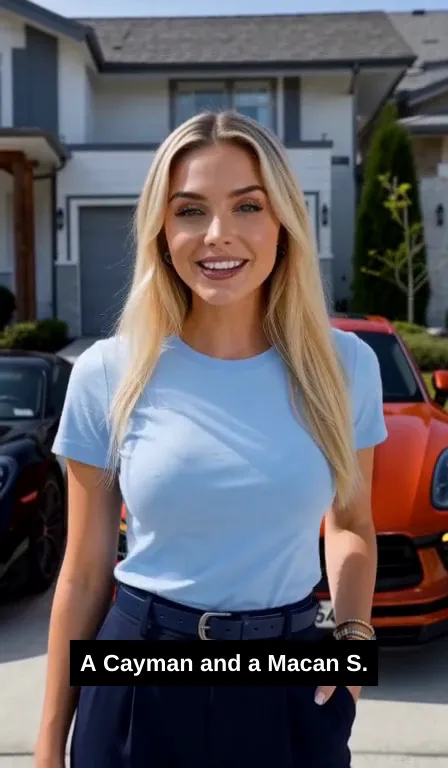
The anchor frame
How the run went
- The plan came first, and no GPU time was spent until I said go.
- The logos, outfit stills, host card, and voice audition each needed my approval before the next one started.
- Each reference plate, for every location and for my own cars and key, needed my approval.
- Every spoken line was written out with its time and shown to me before any clip rendered.
- Each of the six clips rendered as its own job, and I reviewed them one at a time.
- The last step stitched the clips with hard cuts, added titles and captions, and put the result in the Studio gallery for my review.
What broke, and the fixes
- The model invented speech. The first draft gave her 9 or 10 words in a 10 to 12 second clip, and the model filled the silence with garbled words. The fix was to write every line with a time cue at about 2.5 words a second and to state in every gap that she does not speak and her lips stay closed.
- "911" came out as "nine one one". Writing the line as "nine-eleven" fixed the speech, and the caption still shows "911".
- A close-up of a speaker grille rendered as a strange mesh. Keeping the camera on her, with fine detail left soft, fixed it.
- She held the wrong car key. A reference picture alone did not get a small prop right. I described the key in words (shape, color, trim, crest, and buttons) and staged it crest-up in her open palm.
- She said the closing line twice. Adding "say it once and only once" made it worse. A shorter line fixed it, with a silent glance back at the car before the line on its own cue.
One flaw stays in: she mispronounces "Macan" in the last clip. I kept it because the rest of the take was good.
Next
Phase two puts Blender in front of the shot list: a grey stand-in set measured once gives camera heights, distances, and left and right from one 3D space. I will test it on one clip of the next film, and it stays only if it beats the text-only version of that clip.
Related reading
 Studio · November 14, 2026
Animated explainer videos from a chat, on an ordinary computer
A small MCP server lets Claude turn a topic into a narrated, animated explainer video in about two minutes, using only the processor of an ordinary computer.
 Studio · November 8, 2026
Making a first video with Claude, from a web page to a local studio
A beginner's route into video: Claude writes a web page that animates, a short script records it to MP4, and five more steps lead to a local studio with pictures, clips and music.
 Studio · October 28, 2026
Five videos from one MCP: an agent drives the VRGDG Music Video Builder
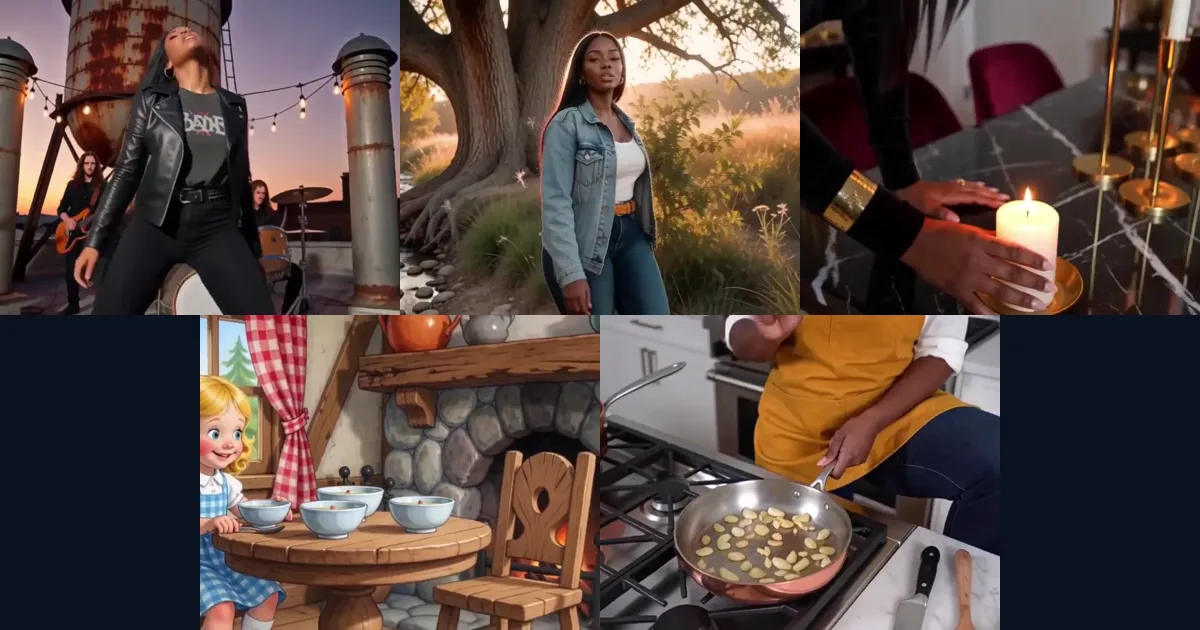
I gave Claude Code the MCP server that ships with the VRGDG nodes for ComfyUI and let it make the videos itself on one NVIDIA DGX. No one touched the Builder UI. It made rock, country and R&B music videos, a narrated Goldilocks and a cooking show. This entry has all five, what worked, what broke, and the runbooks to do it again.